
HISTORIC England has selected four projects in East Sussex to uncover and celebrate its working class heritage.
Historic England received more than 380 applications and has chosen to fund 56 community-led projects, six across the South East, that will explore the stories
of people and places at the heart of our history.
The total amount of funding awarded by Historic England will be £875,000 ranging from £6,800 to £25,000 per individual project. The sum of £87,000 has been pledged towards projects in the South East.
Tom Foxall, Historic England Regional Director, said: “There are so many hidden histories to uncover across the country. Every community has a story to tell and we want to hear them.
“This is the strength of our Everyday Heritage grant programme, which funds projects that are community-led and really engage with local people by empowering them to research and tell their own stories.
“I’m excited to learn more about these fascinating projects as they shine an important light on our working-class heritage.”
Ponswood Stories, Lifesize CIC, St Leonards – £12,300
This project by Lifesize CIC will be focused on co-creating a topical radio show with learning disabled participants with connections to the Parchment Trust.
The show will feature stories about the history of Ponswood industrial estate in St Leonards, where the Trust’s Co-operative centre is based.
Established in the 1960s, Ponswood was the first industrial estate in St Leonards and was home to electronic companies such as Kolster-Brandes and Phillips.
Today, the estate continues to be a key place of work for many local people. The project will enable learning disabled participants to learn more about their immediate surroundings, and the place it has played in the lives of people in the local area and beyond.

Parker Pens: The Working Class Oral Histories of Newhaven Town, Press Play Films – £21,840
Press Play Films will bring together different generations to record community oral histories and create short stop-motion animations in clay to uncover the rich working-class history of Newhaven’s renowned Parker Pen factory.
Having started life in a few ex-army huts, it gradually became one of the largest and most technically advanced pen factories in Europe.
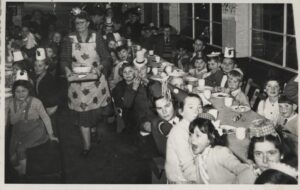
The once-thriving site had a 1,200-strong workforce, but after gradual dismantling, the factory was demolished in 2014.
The project will encourage intergenerational understanding of Newhaven’s community heritage and industrial past, with pupils involved in interviewing people who worked at the factory before these memories disappear.
The project will involve ex-Parker employees, local primary and secondary school students, Newhaven Museum volunteers, Hillcrest community centre and the town’s wider community.

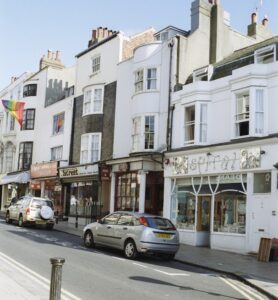
Revealing St James’s Street LGBTQIA+ heritage, Marlborough Productions, Brighton – £24,900
This project seeks to reveal the LGBTQIA+ working class history of St James’s Street, the epicentre of the queer culture in central Brighton since 1980.
Marlborough Productions, through its Queer Heritage South programme, will focus on the community of cabaret and drag performers plus associated venues, business owners, bar managers and staff which are the beating heart of St James’s Street.
This community has witnessed enormous change in the last 40 years, navigating issues like the HIV/AIDS crisis and more recently the Covid pandemic alongside local shifts in nightlife and ongoing gentrification.
The project aims to increase wellbeing in LGBTQIA+ communities through involvement
with heritage to foster a greater sense of ownership and connection with the city.
Celebrating 200 years of St Peter’s Brighton – £10,450
The foundation stone of St Peter’s Church was laid on 8 May 1824. Over the past 200 years the church has witnessed great changes as Brighton has grown from a small fishing town to a thriving city.

St Peter’s 200-year anniversary is an opportunity to bring the community together and, using the Grade II* listed church as a focal point, celebrate the rich and diverse history of Brighton.
The project will create a series of events and activities to engage people from all walks of life and aims to collect and share 200 forgotten and untold narratives of individuals whose lives have intertwined with St Peter’s over the past two centuries.

The Everyday Heritage grant programme aims to shine a light on the diversity of our heritage and is part of Historic England’s commitment to ensuring that a wider range of people are able to connect with, enjoy and benefit from the historic environment.
Launched in 2022, the programme has already funded 57 projects from across England.

